

For producers in the packaging business, selecting the right plastic bottle blow moulding machine is a critical choice. Choosing the wrong equipment can result in production inefficiencies, more operating expenses, and even missed commercial prospects as technology advances quickly, different product needs arise, and competition intensifies.
Many companies succumb to typical selection traps, like concentrating only on price, ignoring energy use, or neglecting aftersales assistance. This essay provides a pragmatic and professional roadmap to aid you in avoiding these traps and enable wise decisions on plastic bottle blow moulding machines.
From defining production needs to assessing equipment performance, cost control, mold compatibility, and technical support, we will examine five important factors that industry professionals value most.
1.How to Clarify Production Needs to Avoid Blind Equipment Selection
Selecting the ideal plastic bottle blow moulding equipment starts with a thorough knowledge of your manufacturing demands. Many producers get stuck buying machinery that doesn’t fit their operational objectives without this important first step, which causes subpar performance, increased expenses, and production delays.

1.1 Understand Your Product Requirements
Before choosing plastic bottle blow moulding equipment, consider the kinds of plastic bottles you plan to manufacture. Think on:
·Are you making bottles for meals, vegetable oils, household chemicals, or cosmetics?
– Will you employ PET, HDPE, PVC, or another polymer? The choice of machinery and moulds is directly impacted by the material.
The kind of blow moulding procedure needed depends on the shapes, dimensions, and labelling criteria of the bottle design.
A discrepancy between equipment capacity and product design might result in production bottlenecks or quality problems.
1.2 Define Production Capacity and Output Goals
Between types, plastic bottle blow moulding equipment differs greatly in capability. Avoiding pointless investment or inadequate capacity requires one to:
·Determine your monthly, yearly, and daily production goals.
·Organise seasonal variations or capacity growth in the future.
·Think about whether you want smallbatch adaptable devices or highspeed automated solutions.
The right machine should provide for corporate expansion while still meeting your current output needs.
| Production Level | Recommended Machine Type | Output Range (BPH) |
| Small-Scale (Startups) | Manual or Semi-Automatic plastic bottle blow moulding machines | 500 – 1,500 bottles/hour |
| Medium-Scale (Growing Brands) | Fully Automatic Single-Cavity Machines | 2,000 – 6,000 bottles/hour |
| Large-Scale (Mass Production) | Fully Automatic Multi-Cavity Systems | 8,000 – 20,000+ bottles/hour |
1.3 Evaluate Bottle Specifications in Detail
Your bottle specifications have a direct influence on the choice of plastic bottle blow moulding equipment. Among the main elements are:
·Small bottles (30ml–500ml) versus large containers (1L–5L+) constitute bottle volume.
·Affects fit with capping systems.
·Wall thickness influences material use and life.
·Some bottle shapes may restrict labeling possibilities.
To prevent flaws, machines need to be able to consistently handle these details.
1.4 Determine Mould Quantity and Flexibility Needs
For companies with varied product lines, it’s imperative to choose plastic bottle blow moulding equipment allowing:
·Quick mould changes for many bottle varieties.
·Several cavity choices to boost production without having to add more equipment.
·Future mould suitability for next designs.
Poor mould modifications will cause too much downtime, which directly affects profit.
1.5 Choose the Right Blow Moulding Process
There are three main blow moulding processes, each suited to different applications:
| Process Type | Best for | Common Products |
| Extrusion Blow Moulding (EBM) | Hollow containers, medium to large sizes | Motor oil bottles, industrial tanks |
| Injection Blow Moulding (IBM) | Precision, small sizes, smooth finishes | Medical bottles, cosmetics |
| Stretch Blow Moulding (SBM) | High clarity, lightweight, pressure resistance | PET water bottles, carbonated drinks |
Selecting the wrong process for your specific bottle type is one of the most common pitfalls when choosing plastic bottle blow moulding machines.
2.Focus on Equipment Performance and Stability
The performance and stability of plastic bottle blow moulding equipment are essential for producers in the packaging sector to guarantee regular production, top quality product, and long-term operating efficiency. Choosing a machine without sophisticated control characteristics or dependability can result in regular downtime, subpar goods, and higher maintenance expenses.
2.1 Key Performance Indicators of Plastic Bottle Blow Moulding Machines
To make an informed decision, manufacturers must evaluate several core performance indicators of plastic bottle blow moulding machines:
| Performance Factor | Why It Matters |
| Production Speed | Higher speeds increase output and improve overall productivity. |
| Preform Heating Uniformity | Ensures material consistency and prevents defects in blown bottles. |
| Blowing Consistency | Maintains uniform bottle shapes and sizes across all production cycles. |
| Machine Stability | Reduces the risk of sudden breakdowns and production interruptions. |
The combination of these factors directly affects the efficiency of plastic bottle blow moulding machines, especially in high-volume manufacturing environments.
2.2 Prioritize Advanced Machine Components
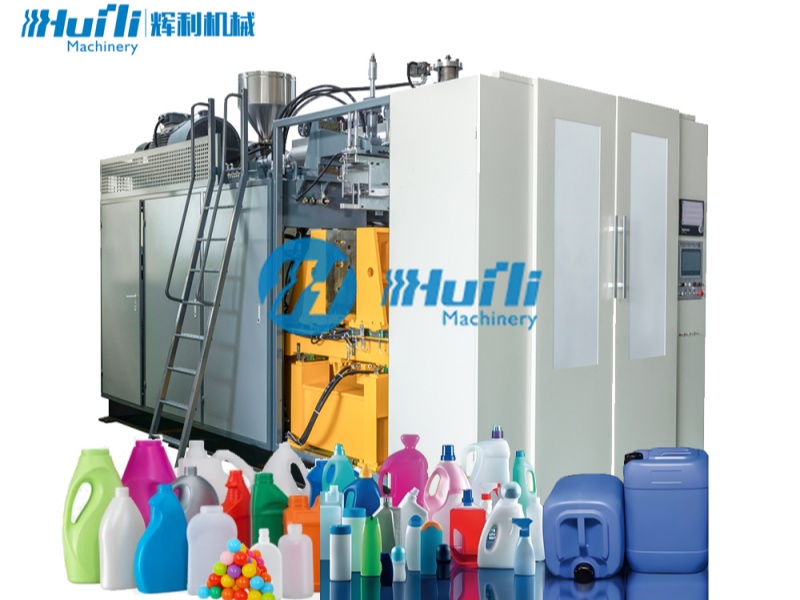
Modern plastic bottle blow moulding equipment comprise several essential components that define general performance:
· Main Machine Body: Strong construction lowers stability and vibration.
– Guarantees accurate and gentle clamping and blowing actions with the hydraulic system.
Realtime monitoring, recipe management, and fault diagnosis are made possible by cutting-edge PLC and HMI interfaces.
Not only does investing in plastic bottle blow moulding equipment with sophisticated control systems and great automation levels improve production stability, but also lowers the need for human interaction and operational mistakes.
2.3 The Role of Automation and Smart Monitoring
Improving plastic bottle blow moulding machine performance depends heavily on automation. Among the main advantages of smart features are:
Realtime production data monitoring
·Automatic defect detection of preforms
· Modes to conserve energy during times of low demand
· Predictable maintenance alerts to prevent unforeseen failures
Manufacturers who choose plastic bottle blow moulding machines with smart systems can greatly increase production consistency, cut waste, and lower total costs.
2.4 Performance Benchmarking for Equipment Selection
To facilitate selection, manufacturers can use the following performance benchmarks as a reference:
| Feature | Basic Machines | Advanced Machines |
| Production Speed (BPH) | 1,500–3,000 | 6,000–15,000+ |
| Automation Level | Manual/Semi-Automatic | Fully Automatic with Smart Control |
| Energy Efficiency | Standard | High Efficiency with Energy Recovery |
| Monitoring & Diagnostics | Minimal | Comprehensive Smart Monitoring |
Selecting plastic bottle blow moulding machines that meet higher performance standards ensures greater competitiveness and long-term return on investment.
3.Energy Consumption and Cost Control: Key Considerations
Businesses trying to boost profits and sustainability have given highest attention in the cutthroat manufacturing sector to the energy efficiency and operating costs of plastic bottle blow moulding equipment. High energy use affects the environmental footprint of manufacturing processes in addition to raising production costs.
3.1 Energy Consumption: A Persistent Challenge in Blow Moulding
One of the most important problems with the use of plastic bottle blow moulding equipment is still energy usage. Among the many energy intensive steps in the blow moulding process are:
·Preforming heat
High-pressure air blowing
Cooling and expulsion of bottles
Poorly designed equipment might consume a lot of electricity, which directly increases unit cost per bottle and lowers total profitability.

3.2 Evaluate Energy Efficiency Before Selecting Equipment
When selecting plastic bottle blow moulding machines, manufacturers should carefully assess the machine’s energy efficiency rating and technological innovations that help reduce power usage. Key factors to consider include:
| Energy Efficiency Feature | Impact on Cost and Sustainability |
| High-Efficiency Heating Systems | Reduces power needed for preform heating by up to 30% |
| Energy Recovery Systems | Captures and reuses heat energy, lowering total energy consumption |
| Servo-Driven Hydraulic Systems | Minimizes energy waste during idle times |
| Advanced Cooling Technology | Enhances cooling speed, cutting down cycle time and power usage |
Machines equipped with these features help lower electricity bills, making plastic bottle blow moulding machines more cost-effective in the long term.
3.3 The Cost-Benefit of Low-Energy Blow Moulding Machines
Although highefficiency plastic bottle blow moulding equipment often demand a greater beginning investment, over time they provide substantial cost savings. Among the advantages are:
·Lower energy expenditures per bottled bottle
·Lower carbon emissions
·Reduced machine wear resulting from improved procedures
·Reduced return on investment (ROI) periods
The following table illustrates the long-term savings potential of investing in energy-efficient machines:
| Machine Type | Energy Cost per 1,000 Bottles (USD) | Annual Energy Savings (USD) |
| Standard plastic bottle blow moulding machines | $18 | — |
| High-Efficiency plastic bottle blow moulding machines | $12 | Up to $50,000 per year* |
3.4 Smart Cost Control Strategies
Apart from energy savings, managing the whole operational expenses of plastic bottle blow molding equipment calls for:
·Frequent maintenance to prevent expensive failures
·To maximize uptime, optimized production scheduling
·Staff development to guarantee effective machine operation
Manufacturers may reach long-term cost stability and strengthen their competitive edge in the market by integrating energy-efficient equipment with intelligent operational methods.
4.Mould Compatibility and Changeover Efficiency
The mould compatibility and changeover efficiency of plastic bottle blow moulding equipment are essential elements that directly affect production flexibility, downtime, and general profitability in today’s dynamic packaging market, where product designs vary often and bottle diversity is rising.

4.1 The Importance of Mould Flexibility in Blow Moulding
For many sectors like beverages, cosmetics, and home cleaning chemicals, manufacturers employing plastic bottle blow moulding machines usually have to create several bottle shapes, sizes, and patterns. Machines have to: to satisfy market needs effectively.
·Encourage several mold types and sizes without needing major changes.
·To reduce manufacturing downtime, allow for rapid and straightforward mould changes.
· Maintain uniform quality across many moulds without need for whole system re calibration.
Machines without adaptability could restrict a producer’s capacity for prompt reaction to new orders or product line revisions.
4.2 Key Factors to Evaluate for Mould Compatibility
When choosing plastic bottle blow moulding machines, it is essential to assess the following mould-related aspects:
| Mould Compatibility Feature | Why It Matters |
| Multi-Cavity Support | Enables higher output by producing multiple bottles simultaneously. |
| Adjustable Clamping Systems | Accommodates various mould sizes without extensive modifications. |
| Precision Alignment Systems | Ensures uniform bottle quality even when changing moulds. |
| Mould Changeover Speed | Reduces machine downtime and increases overall productivity. |
By selecting plastic bottle blow moulding machines with these capabilities, manufacturers can significantly improve their responsiveness to market trends.
4.3 The Value of Quick Mould Change Systems
Regular product modifications need effective mould shifting. Modern plastic bottle blow moulding equipment provide rapid changeover systems whereby:
·Mould change time decreased by up to 70% against conventional systems.
·Minimal manual intervention through automated positioning and locking mechanisms.
·Toolfree changeovers for some machine models.
Here’s a quick comparison of traditional vs. advanced mould changeover systems:
| Mould Change System | Average Change Time | Downtime Impact |
| Traditional Manual Changeover | 60–90 minutes | High |
| Semi-Automatic Changeover | 30–45 minutes | Moderate |
| Fully Automated Quick-Change System | 10–15 minutes | Low |
The right mould change system not only enhances the flexibility of plastic bottle blow moulding machines but also delivers measurable gains in production uptime and operational efficiency.
4.4 Improving Production Agility Through Mould Innovation
Maximize the advantages of mould flexibility:
·Work closely with mould designers to design worldwide mould bases.
·Invest in modular mould systems that allow rapid insert changes.
·Consistently assess how well newly designed bottles work with current plastic bottle blow molding equipment.
Faster timetomarket, reduced costs, and more adaptability in an increasingly competitive packaging sector result from manufacturers optimizing equipment and mould strategies.
5.After-Sales Service and Technical Support Capabilities
Investing in plastic bottle blow moulding equipment requires careful thought of dependable after-sales service and technical assistance. Unforeseen equipment failures can cause expensive production downtime, so it is imperative to work with suppliers that provide responsive, professional, and thorough assistance.
5.1 Why After-Sales Service Matters
Technical problems can affect even the most sophisticated plastic bottle blow moulding equipment because of wear and tear or mistakes in operation. A fast and efficient answer protects your manufacturing schedule and helps to reduce downtime. Important elements of service to assess are:
· Reaction time to service requests
·Availability of replacement components
• Knowledge of the technical staff
·Remote diagnostics and problem solving
Manufacturers need to make sure their supplier’s support system matches with their operating requirements.
5.2 Local Service Teams and Spare Parts Availability
Having a local or regional service team saves a lot of time in fixing issues. Well stocked spares parts warehouses of suppliers guarantee that necessary components are on hand when required, therefore preventing protracted delays.
| Service Aspect | Benefit to Manufacturer |
| Localized Service Teams | Faster on-site repairs and maintenance |
| Spare Parts Inventory | Quick replacement reduces machine downtime |
| Trained Technical Experts | Accurate diagnosis and efficient problem resolution |
5.3 Remote Monitoring and Technical Upgrades
Many contemporary plastic bottle blow moulding machines enable remote monitoring systems, hence letting technicians:
·Real-time problem diagnosis
·Make remote software updates and optimizations.
·Give onsite operators direction to address little issues.
Proactive help lowers the need for expensive service visits and raises machine uptime.

5.4 Selecting Suppliers with Strong Support Networks
When choosing suppliers of plastic bottle blow moulding machines, consider the following checklist:
| Supplier Support Criteria | Why It’s Important |
| Local service presence | Ensures rapid response and personalized support |
| Spare parts logistics | Prevents long production halts due to parts unavailability |
| Technical training programs | Empowers operators to manage basic troubleshooting |
| Remote service capabilities | Minimizes downtime through immediate problem detection |
Investing in plastic bottle blow moulding machines from suppliers with robust after-sales support guarantees smoother operations and protects your business from unexpected production losses.
Choosing the perfect plastic bottle blow moulding machine is a calculated investment that has direct effects on your manufacturing efficiency, product quality, and long-run profitability; it’s not only about comparing prices. Common choice mistakes can be avoided and the worth of your investment maximized by plainly stating your production demands, concentrating on equipment performance and energy efficiency, guaranteeing mold compatibility, and securing dependable aftersales support.
Working equally vital is with a reliable vendor who knows your company needs and offers both technical know-how and fast service. Your blow moulding processes can produce more product, cheaper costs, and more market competitiveness with the right equipment and the right support.